








UK Property Forums gathered the leading lights in the regeneration of Oxford and Oxfordshire for a round table discussion on the ways ahead. Alan Bunce reports.
Winning hearts and minds will be as important to bringing forward regeneration of Oxford and the surrounding area, delegates were told at the Shaping the Future round table debate.
The December 18 meeting at Oxford Town Hall, organised by UK Property Forums, identified a clear agenda: stronger communication with residents, renewed urgency on Oxford railway station, fast delivery of major schemes and the creation of a single entry point for investors seeking to engage with both city and council.
Chaired by UK Property Forums managing director Matthew Battle, the discussion was held just days after Oxford Growth Commission published its interim report.
Commission chair Neale Coleman summed up the task so far. Oxford was the intended focus of his commission but a wider perspective proved essential.
He said: “What I was asked to do by (Housing Minister) Matthew Pennycook was look at growth in Oxford and the surrounding area. As a matter of practicality, given the structure of local government, once you look at the situation you’ve really got to look at the whole of Oxfordshire.”
Key clusters, he said, include Science Vale (including Harwell) but also ‘Motorsport Valley’ in Bicester.
Those areas offer further growth but the commission is largely focused on economic growth and activity in the city of Oxford because of the agglomeration benefits and the potential to release further land.
He added: “We are trying to prioritise the city, because one of the central messages in our report is Oxford needs to grow. It’s critical that the city grows. Quite a lot of our work in the next phase is looking at that in much more detail.”
However, the failure of the Oxfordshire 2050 Plan has, he said, left councils planning too few new homes. While the commission seeks to avoid getting embroiled in issues around councils’ Local Plans, it targets removing blockages to delivery of developments.
He went on: “What we want to concentrate on is speeding up and accelerating delivery of existing allocations and sites.
“One of the things I’m saying to everyone is we need to act, particularly from the local authority perspective and the regulator’s perspective, with much more pace and speed. Everything is far too slow.”
As an example, he pointed to the Begbroke innovation district, where it took 18 months to get the s106 agreement signed and where securing outline permission cost £8 million.
“This is no good. One of the main messages in the report is that we want to do some quite intensive work on accelerating housing development over the next 12 months.
“And off the back of the interim report and conversations with the department and Homes England, I think I now have final agreement to get a significantly bigger Homes England team to come and work in Oxfordshire.
“We’ve had half a person – a very good person – but we’re now building that up to four or five people to really try to fill in some of the gaps there are in capacity.”
Discussions with councils over which schemes are easier to deliver had been fruitful.
However, Mr Coleman said: “I’m trying to be quite ambitious so I’m trying to look at things like Begbroke and Oxpens but there are a lot of others that are easier.
“I started off by saying I don’t want to focus too much on things which are going to happen anyway but, having talked about it and thought about it, actually we do need to focus on those because they still need kicking.”
Regular meetings are held with key utilities and public bodies to tackle infrastructure constraints and he reported that one of the chief purposes of the commission was to ensure Oxford has a voice at departments like Defra and the DfT.
One ambition is to ensure major planning applications are worked on by one team across councils and other public bodies.
He identified three major opportunity areas:
- Cowley branch line area including The Oxford Science Park and The Ellison Institute of Technology’s (EIT) investment, along with the wider Kassam Stadium site and land to the south.
- Oxford Parkway station area, including Kidlington, London Oxford Airport and Oxford Technology Park.
- Oxford West End, including the station and Botley Road redevelopments.
The latter two areas prompted thoughts on the ways ahead. He said: “It’s absolutely weird that Parkway station is surrounded by great masses of surface level car parking. That should be the focus for a centre and a lot of that car parking should be up in the air.
“We’ve got East West Rail involved in that conversation, we’ve got Cherwell involved and the city and we have Arup doing spatial framework for that opportunity area.”
At the West End, the station improvements are being hampered by prolonged delays to re-opening Botley Road.
He went on: “We have to get Botley Road done. That’s been a catastrophe. Not just because of its impact day-to-day on Oxford but because it’s eaten all the money that was there for the western entrance to the station.
“Therefore we have a big challenge in getting something of quality, the sort of thing that we want there, rather than a shed, as the entrance to the west.”
The station, he said, needs new buildings to the east and west and Network Rail is hiring new masterplanners to look at development of areas including the Becket Street car park.
“One of the things we say in our report, and it’s true is for a city like Oxford, one of the biggest tourist attractions in the country, is the entrance to the city is a complete disgrace.”
Rachel Wood, managing director of Sladen Estates, agreed with the need for speeding up development but she questioned how effective any subsequent measures would be.
She said: “Local authorities need the resources. It’s great that you can have those conversations but it’s about making sure that it trickles down to the working level.”
Charles Butters, strategic property consultant to Oxfordshire County Council, praised the work of the commission but called for structures to be put in place to get things done.
Directing his thoughts to Neale Coleman, he added: “There are really good signs that that change is under way and your work is a catalyst for that change. But there’s clearly a lot more that needs to be done.”
Richard Venables, senior director with CBRE, argued that both the city and the county struggle with identity, partly because of the fragmented nature of local government.
“We’ve had 50 years of expansion on Oxfordshire without the expansion of Oxford,” he said.
Many people, he pointed out, didn’t want expansion of either Oxford or Oxfordshire but things are now changing because of a more central Government-backed top-down approach through the commission.
He added: “I think the biggest question is how we bring the people of Oxford with us.”
Meeting chair Matthew Battle asked Olga Kozlova, director of innovation for the University of Oxford and Equinox, a university-inspired hub for stakeholders to present a single face of Oxford to investors, to explain its function.
She said: “For some time, we have lacked a single voice, a single vision. Everybody will stand up in Oxford and say ‘there’s a massive opportunity’ but we lack that one story that we can tell jointly, whether that’s the university, industry partners or the investment community or developers. The reason for creating Equinox is to bring everybody together.”
She argued that Cambridge is ahead of Oxford is doing so.
Oxford, she said is competing with Singapore, Shenzhen and other international centres, rather than UK cities.
Keeping the community on board is another focus for Equinox.
“When we talk about growth, we lack the narrative ‘what’s in it for me as a citizen’.”
Placi Espejo, place and ecosystems manager for Oxfordshire County Council, said a package of support for businesses is needed, especially for smaller, less established firms.
She added: “I think we are missing a package to support these companies to drive them forward and I’m hoping that working with Equinox and the rest of the groups in Oxfordshire we can build some kind of package.
“There is a disconnect because there is no understanding of who is who in Oxfordshire.”
Nas Jeffries, commercial property manager for UKAEA at Culham, said its site and the fusion technology it is known for is becoming better noticed globally but infrastructure remained a problem.
He said: “We had a company from Singapore coming to see us and asked what the connectivity is like.
“I said ‘well in a number of years’ time it’s going to be very good’. Infrastructure is still an issue for us.”
However he noted Culham is on the up and expanding. He added: “2026 is going to be a very big year for Culham. We expect to appoint a strategic investment partner in Summer.”
The subject of whether Government funding for infrastructure is now more likely through the commission, was raised by UK Property Forums consultant, Hugh Blaza.
Neale Coleman noted funding to flood relief work at Kennington Bridge and the support for the Cowley branch line. But he added: “What we’ve managed to do is create a climate in which well crafted, well argued, well lobbied business cases have a good chance of being approved.
“Without the city council and Tom Bridgman there would never have been a business case so we could have lobbied all we like but we would have been off base.”
He revealed he wants a new train station at Begbroke and potentially further stations at Heyford and Ardley.
The subject of community involvement came into sharp focus when Olga Kozlova described four fundamental aims of Equinox.
She said it aims to:
- Attract inward investment.
- Provide an accelerator.
- Provide a clear entry point to Oxford.
- Reach out to communities, an area which is still under development.
Richard Venables, senior director for CBRE said his firm had signed up to the Equinox charter but urged it do more work on its community efforts.
He said: “The people of Oxford will read first three objectives and say ‘well what does that do for me?’
“So we need a complete reframe about Oxford University and how the academic infrastructure can assist, not just by creating jobs which provide opportunities, not just by advancing housing which creates opportunities – but what we are actually doing for the community because we are front and centre of what Oxford is about
“Without kitchen staff and cleaners, without bus drivers, without teachers we’re never going to be able to advance our society or economy.
“And I think one of the fundamental things we’ve got to do is refocus on education in Oxford and say ‘how are we going to get our children to advance their educational aspirations?’
“Not just to go to Oxford or Cambridge but how to just get a GCSE.
And he described the problem of attracting and retaining teachers.
“At every school I go to, the biggest single issue is ‘our teachers can’t afford to stay here’, so we have this disjoint in our education system.
“We’ve got a top-down approach by the growth mission. We need a bottom-up approach to the real fundamentals about poverty and education and I think this is what’s missing with Equinox.
“It’s coming in at a high level saying ‘there is aspiration and opportunities’ but it’s about the really difficult bits.”
Charles Butters said: “It surely isn’t the job of Equinox to solve all the social issues and inequalities that exist within Oxfordshire. Equinox, as its name suggests, is absolutely focussed on innovation.”
Neale Coleman, who had worked on the 2012 Olympics, pointed to the work which had gone on in Stratford regarding apprenticeships, schools, cultural organisations and work done with young people by the development corporation and others.
Resource, he said, will be needed for Oxford but could be just three or four people.
He went on: “I’m in the process, together with Tom Bridgman and colleagues at the city council of talking to Ellison in terms of their planning application.
“It will need to have one of the city’s community employment and procurement plans attached to it about how they reach out to local people and whatever
“I have also said to others at Ellison, ‘you are just down the road from Oxford Academy, the least successful secondary school in Oxford’. It’s only once got an Ofsted ‘good’.
“And, talking to people at River Learning Trust, they will say what they really need is not just about aspiration to go university, it’s about how to get a job.”
He raised smiles when he said he accepted Larry Ellison has ‘quite a job on’ with Paramount’s attempt to take over Warner Bros, but he added: “I just think it’s really important as a signal, since we go on about this ‘very shining light’ (Ellison at Oxford) to show that it’s also a great shining light for people who live around there, for the academy school, for the FE college on Blackbird Leys and so on.
Nas Jeffries accepted that UKAEA had been guilty of being ‘a bit insular’ over the education opportunities it has available.
He said: “On our campus we’ve got a large apprenticeship and upskilling centre. We’ve also got a national fusion outreach course and I think it’s about pulling all this together.
“We do have, in certain areas, significant resource to help Oxfordshire on that but I think that is about our education of what is going on around us, outside of our fence and piecing it all together. It’s very interesting and we will be taking this information on board.”
The debate moved to the demand for space within Oxford and whether it is still at the sky high levels of recent years.
Matthew Battle asked the meeting’s only property agent, Richard Venables, to describe take up in 2025.
He said: “2025 is going to be seen as either our best year ever or our worst year ever for take up.
“If you include Ellison as they’ve taken half the science park – that’s going to be, say 800,000 sq ft – and then you add that to the 200,000 sq ft take up we’ve got, and that’s our best ever year.
“Take Ellison out of the picture and it’s pretty drastic, pretty woeful, in terms of take up.”
The size of deals in recent times, he said, is much reduced.
“This entirely relates to VC funding, or the lack of it, which is the lifeblood that drives our tech community over time.”
Deals came through when professional services firms began consolidating after Covid and those are still happening but are now on a smaller scale.
Oxford, he said, is an organic market and it needed a cut in interest rates (which happened later that day).
He went on: “We have supply coming through but I think we will see a pause in that supply from 2028 onwards.”
He blamed the impact of a four-fold increase in CIL charges in the city which, he said, will be huge.
Mr Venables said Oxford is the envy of other cities apart from Central London. Oxford has two million sq ft coming through in the next 18 months.
He talked of the positives in terms of future demand. Flexible ‘lab-enabled’ buildings, which are not fitted out, are coming through and the city could be at the forefront of the quantum computing revolution.
And those prospects are on top of what Ellison brings, something he said we don’t yet know the business model for.
The county, he argued, offers a wide breadth of industries from motorsport in the north to national science in the south.
“We are an amazing ecosystem that is ready to go and we’ve also got the city centre and regeneration that is happening there.
“I wish I was a younger man because I think we are moving from a regional shire university town into this global super ecosystem where we will see fantastic things happening.”
However, he added: “I think it’s going to be a 10 to 20 to 50 year project that will absolutely redefine Oxford.”
Promising requirements for 2026 were already evident, he said.
He added: “As an agent, I’m eternally optimistic. The glass is half full.”
As a round table round up, Matthew Battle asked delegates to look ahead, either 12 months or five years and offer a view as to their hopes.
Rachel Wood said: “As a developer across England we have got to see more investment.
“We’ve talked about VC capital but the investment market is just sat on the fence at the moment.
“They do not want to commit. Interest rates are high and they are just not committing – and that is across all sectors.”
She said many potential occupiers had waited for the November Budget before committing but take up is still slow.
She said more demand has been reported among industrial occupiers but even when they want to go ahead, commitment is taking a long time.
“So, if you get an enquiry it might take two years to actually land. It’s about translating that demand into something that’s going to land in the next 12 months
“In the next 12 months the investment market has got to free up, whether it’s the housing delivery, employment market – all the things we need – we’ve got to get the investment market moving.
Richard Venables said: “Let’s not miss this opportunity while the Government is fully focused on us
“Local government reorganisation is both a challenge and an opportunity. It could stall planning and development for a considerable period of time or it could unlock it through sensible regional spatial planning.
“I think the catalyst will be the Cowley branch line and the EIT. It’s really exciting to see how those two bits will come on. Then the city centre regeneration and, hopefully, news on the station.
“Finally it’s about the economy, the whole of the UK economy being able to create and promote growth. We just need to get out of this malaise.”
Neale Coleman admitted to being ‘a bit obsessed with pace and getting rid of blockages’.
Progress is being made on heritage policy and he said he was unsure if NPPF changes would help.
He said resource is needed for public realm improvements and capital is required for innovation.
Olga Kozlova said: “Having scale-up capital available, maybe not in 12 months. It may be 24 months.”
Placi Espejo said: “I would like to see more companies stay in the area – to have one Oxfordshire. And getting clusters to work together. “
Nas Jeffries said connectivity, both physically and conceptually, is key.
“I think, in the UK, it’s important to support innovation which we are doing.
“So for me it’s innovation and spin-offs, and the ability to provide the larger industrial and office facilities when required.
“And also a focus on the community across Oxfordshire.”
Hugh Blaza pointed to locals’ negativity as witnessed in the local media.
He said: “You’ve got to change the tone of the Oxford Times. You’ve got to communicate the great things that are going to happen to bring all the sectors of the community with you on all the things that are happening.
“At the moment there’s a perception that the centre of Oxford is going to be turned into a university campus without anything for anybody who’s not involved with the university.”
Inclusivity, he said, is key but he added: “Somehow we’ve got to communicate it.”
Charles Butters said: “I’m incredibly positive about Oxford and Oxfordshire’s future. We’re not going to change it in the next 12 months. It’s five to 10 or 50 years.
“I would like to see local government and a wider group of leaders in place to be much more ambitious, much more bold, to look at Oxford as a city that should be absolutely world class.
“And, as a business district alongside a university that’s absolutely world class, that the two absolutely support one another.”
“I would also like to see local government do more in terms of controlling its destiny – so stepping up and taking responsibility.”
Matthew Battle said: “I guess mine would be Oxford railway station. It’s an arrival point. You arrive here, this is Oxford and, at the moment, it’s dreadful. I think if we get action on that – and it’ll take time – I think it could unlock all sorts of things.”
The Oxford/Oxfordshire debate will continue at OxPropSummit on March 25 and 26.
Visit: https://events.humanitix.com/oxprop-summit-2026
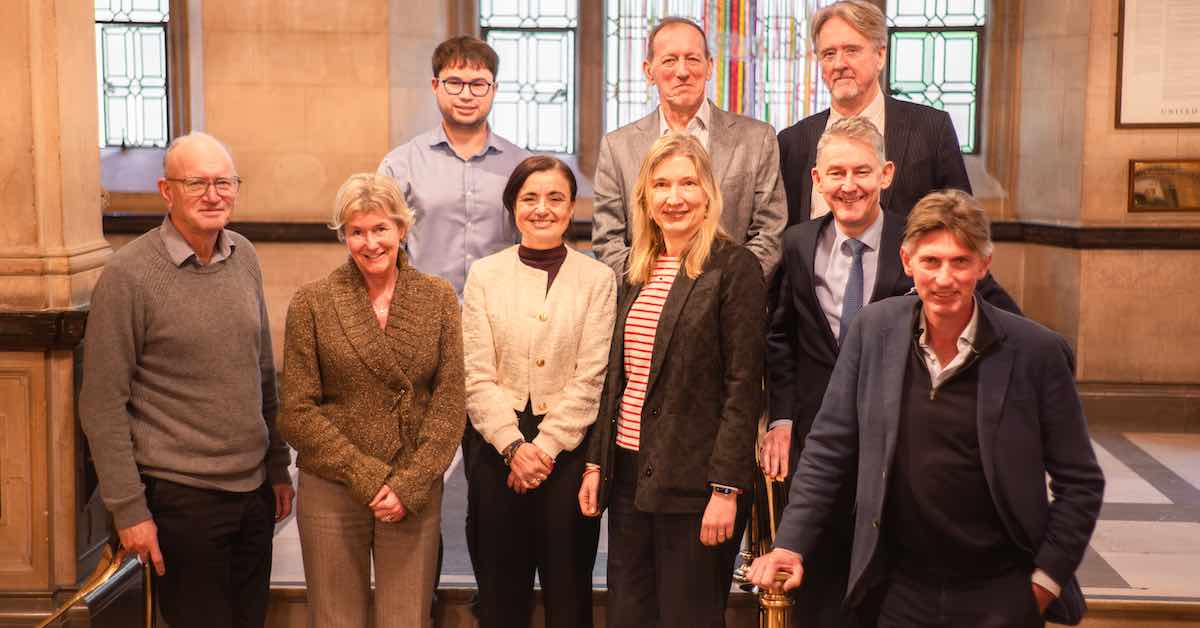
Image (l-r): Back row: Nas Jeffries, Matthew Battle, Hugh Blaza. Front row: Neale Coleman, Rachel Wood, Placi Espejo, Olga Kozlova, Richard Venables and Charles Butters.
© Thames Tap (powered by ukpropertyforums.com).
This article and its contents are the intellectual property of UK Property Forums and may not be reproduced, distributed, or used in any form without prior written permission. The views expressed are those of the author(s) and do not constitute legal or professional advice.