











On Monday 8 June, members of the Oxfordshire Developers Forum gathered at Oxford North to discuss the latest emerging factors influencing Oxfordshire’s property development. Alfie Morse reports.
The meeting’s central event – a panel discussion paired with an Oxfordshire County Council (OCC) presentation – covered the latest updates to parking standards for new developments, which have been adopted since April 2026.
Michael Deadman, transport development manager at OCC presented the updates, he outlined that whilst the standards are guidance, not policy, they are: “A material consideration”, but also that: “Every proposal will be assessed on its merits”. The key updates were:
- The distances from amenities and public transport provision are now further for mandatory car-free developments:
- Car free developments were previously required as per the 2022 standards when parts of a development were within 400 metres of public transport services, the 2026 updates now require car-free developments when they are situated within 600m of a bus stop, and 1km of a train station
- The 2022 standards had a blanket provision requiring car-free developments when parts of a development were within 800m of GP surgeries, supermarkets, primary & secondary schools, and employment areas – Now the standards have increased to 1600m for GP’s and primary schools, and for secondary schools the standards reach up to 3.2km.
- Car light developments will be required where parts of a development are within 800m of a bus stop, 1.6km of a train station, supermarket and primary school, and 3.2km of healthcare provisions, secondary schools and employment areas.
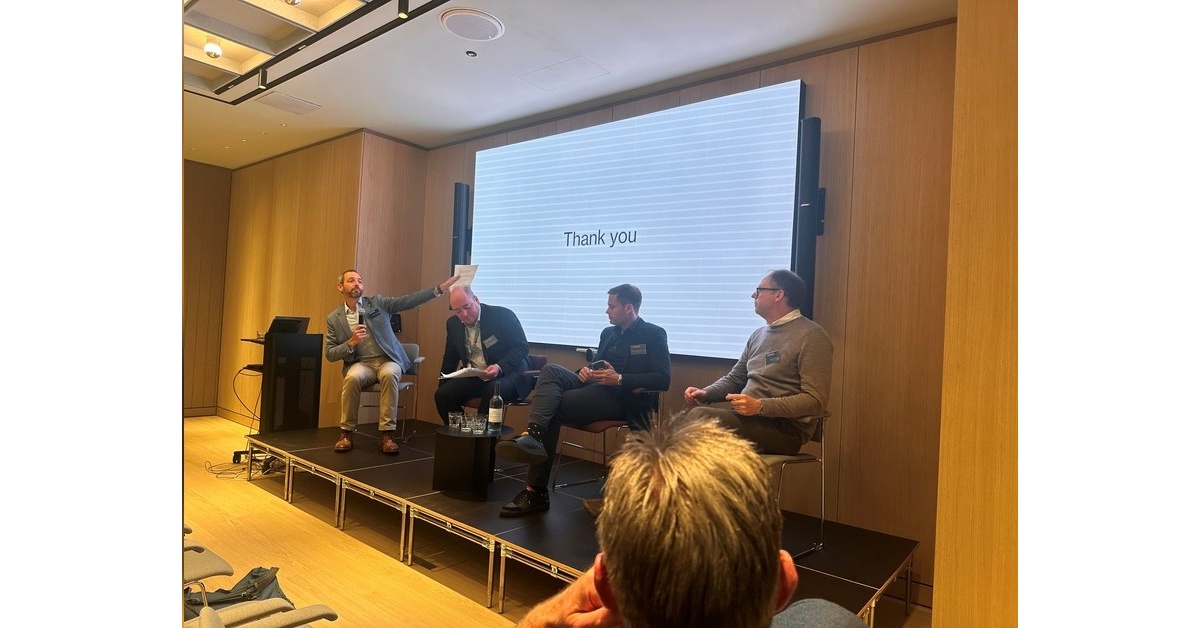
After Mr Deadman’s presentation, the panel discussion began, chaired by Julian Seymour, chief executive at Cratus. Robin Rogers, director of economy & place, OCC, and additionally the chair for this meeting, began by expanding on the intention behind the updates, which he said was: “To deliver faster on those LTCP (Local Transport and Connectivity Plan) objectives”, but that the intention: “Is not to blanket one-fits-all rules-based provision”, and reaffirmed Mr Deadmans earlier point by describing the methodology as: “A site-by-site assessment”.
Sebastian Balcombe, senior land and planning manager, Oxford University Development , discussed the updates, saying the new standards: “Came as a shock”, whilst remaining somewhat positive on the previous standards, saying: “I think we were all getting used to the 2022-2023 standards, and actually working pretty creatively with them”.
Mr Balcombe went on to say: “I don’t know that the market is ready, from a housing perspective, to work with the new standards that have been set”, mentioning that he had received extreme reactions from: “Potential housebuilding partners”.
Mr Balcombe concluded by saying: “I implore all the development community within here to work collaboratively with stakeholders to engage in a more effective conversation about how do we achieve the objectives that the council have set out…we are aligned with those”
Gavin Angell, development director, Dorchester Group, was asked about the guidance applying to reserved matters applications, and how that could affect his work, he said: “Fundamentally it could affect the whole viability of the scheme…I think it’s an example of where policy has got ahead of delivery”
Mr Angell went on to point out how the guidance could affect demand for housing, asking: “Who are we building these houses for? I’m not totally clear…how many people would buy a house without a car parking space?” pointing out the low number of attendees who responded affirmatively: “One, two…maybe three in the room”.
Mr Seymour then asked Mr Rogers about what investment needed to be made, he said: “We need to continue to invest in active travel measures, the infrastructure needs to be geared towards that investment in public transport and innovative connectivity work…things like viability for car clubs”.
Mr Seymour asked about County Council monitoring, to which Mr Rogers responded: “We absolutely want to have this kind of conversation…at the level of the system…we’ve got to be able to have this sense of what it’s looking like overall…the system won’t work if we just stand off against each other at each side”.
Mr Rogers was then asked about dates for a bus strategy, which he said was planned for: “We’re working on that now…certainly by the end of the financial year”.
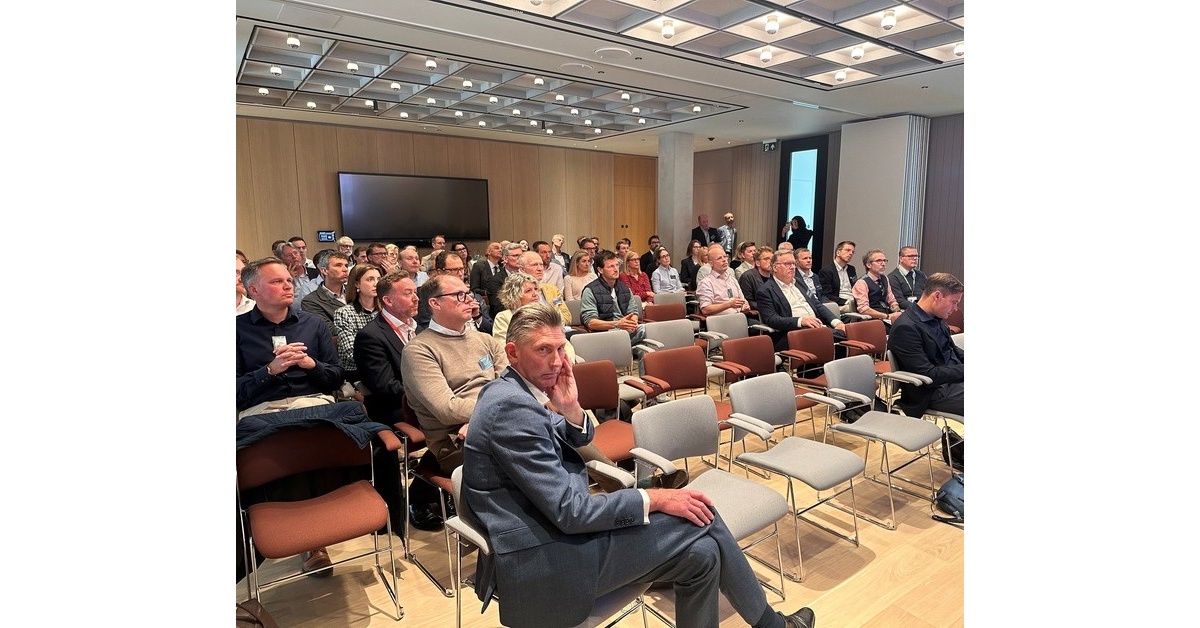
The floor was then opened to statements and questions from attendees, Michael Knott, planning lead, Stantec, enquired: “I’m advising clients, on a lot of sites on the edge of Oxford City…we were actually close to finalising a planning application when the standards were introduced, and the new standards have prompted the clients to pause and review how to proceed…that includes an exercise looking at potential re-masterplanning and how those standards might be reapplied.
“we’re regularly contacted by South Oxfordshire and we’re asked ‘what progress are you making?’…our latest response has been, in light of these standards, we don’t know and we’ll let you know once we have a clearer position…it would be really interesting to know what reaction the updates have had on the local planning authorities”
Mr Rogers responded: “I think a bit of a mixed pitch in terms of LPA responses…all of the questions about deliverability, viability and delay, are certainly ones that our colleague have asked”
David Jackson, head of planning at Savills, asked about the evidence gathered by OCC on the impact of Car-Free standards on the marketability of marketable property, and the evidence available that allows the standard distances from schools and workplaces to increase by 400 per cent.
Mr Rogers responded: “The walkability, cyclability evidence is in the report, the research that is available on both here in the UK, and some international comparators…Melbourne, and Portland is in there.
“In terms of the marketability point…the methodology is intended to apply to those areas of development that are effected…so that’s not an either or on developments, and some developments will fall across different standards…what we haven’t done is a specific viability assessment on the whole policy, on the basis that it’s going to be very site specific given the evidence and opportunities in each place…we’re going to have to look at that as we have conversations with each specific site.”
Peter Newton, director, Original Field of Architecture, asked about implementing Controlled Parking Zones (CPZ), Mr Rogers said: “You effectively have to implement a CPZ to achieve this… you’re going to have to consider what drop-off pickup looks like, what delivery looks like, you’re going to need to control that…whether that’s through CPZ, I think CPZ in most cases…CPZ are also going to be required in adjacent developments.”
The meeting was then concluded. Charles Butters, Oxfordshire Developers Forum strategic lead, informed members that the next in person meeting will be on September 14, at Oxford Science Park.
Lead Image: (l-r) Julian Seymour, Robin Rogers, Sebastian Balcombe, Gavin Angell

© 2026 UK Property Forums. All rights reserved.
This article and its contents are the intellectual property of UK Property Forums and may not be reproduced, distributed, or used in any form without prior written permission. The views expressed are those of the author(s) and do not constitute legal or professional advice.