










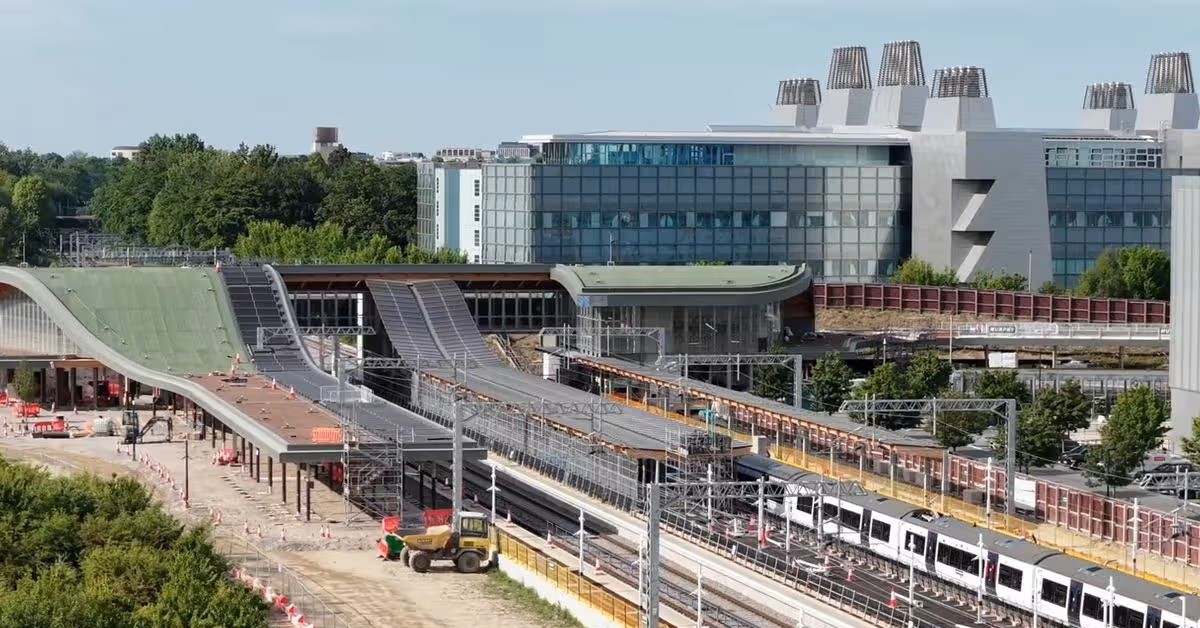
Passengers will soon be able to take trains from the new Cambridge South station after its opening date was revealed today. Services will begin calling at Cambridge South on Sunday 28 June before the station’s official opening ceremony takes place the following day.
The first Great British Railways (GBR) branded station in the country, Cambridge South, is expected to welcome 1.8 million passengers annually as the government’s public ownership programme gathers steam.
The station will benefit from up to 9 trains an hour to the centre of Cambridge as well as a direct link to the city’s Biomedical Campus, with its world-class science, NHS hospitals and business facilities. The Cambridge Biomedical Campus contributes £4.7 billion annually to the UK economy, a figure expected to rise to £18.2 billion by 2050 alongside a doubling of its 20,000 current employees, thanks in part to the boost brought by the new station.
Passengers will also be able to take trains to London, Birmingham, Stansted Airport and international rail services via St Pancras, with up to 20 services calling at Cambridge South in peak hours.
Comments
Lord Peter Hendy, rail minister, said:
“Backed by £250 million government investment, Cambridge South will open up access to jobs, homes and world-class facilities for people across the region, boosting the growth of the Biomedical Campus as one of the most important engines of growth in the country.
“As the first new Great British Railways branded station, the opening is an important milestone for our railways and a sign of the real change public ownership will deliver. Faster connections supporting economic growth, thousands more jobs and homes and a railway that works for the communities it serves.”
Jeremy Westlake, chief executive for Network Rail said:
“We’re excited to welcome passengers to this landmark station from next month, providing direct access to the Cambridge Biomedical Campus and better connections across the UK and beyond. Cambridge South station will significantly improve travel and connectivity for campus staff, visitors and the wider community for many years to come.
Thousands of people have worked tirelessly on this fantastic project to build a modern, accessible and sustainable station that reflects the excellence of the work that is being undertaken in Europe’s largest biomedical facility. It’s been a truly collaborative experience working alongside government, contractors, industry partners and the wider rail network to make this station a reality and we’re really proud of the result and the role it will play in connecting people to jobs, research and opportunity across the region.”
GBR
The opening comes as the public ownership programme continues apace alongside the creation of GBR, which will coordinate the whole rail network in the UK. The creation of GBR will end the rail system involving over 17 different organisations and instead run Britain’s railways as a single organisation for the first time in decades.
As a single organisation, GBR is expected to deliver lasting change and build a railway fit for Britain’s future, owned by the public, for the public. The full public ownership programme is expected to be completed by the end of 2027, with 8 out of the 14 train operators now publicly owned and operators managing more than 1,100 stations.
Alongside setting up GBR, the Government is focused on getting value for passengers and keeping the cost of rail tickets down. Regulated rail fares have been frozen across England until March 2027 so passengers are not paying a penny more on season tickets, peak returns for commuters and off-peak returns between major cities.
Funding
Cambridge South station has been built with more than £250 million of government funding, alongside £5 million contributions from AstraZeneca, Cambridge & Peterborough Combined Authority and the Greater Cambridgeshire Partnership.
Image: Network Rail

© 2026 UK Property Forums. All rights reserved.
This article and its contents are the intellectual property of UK Property Forums and may not be reproduced, distributed, or used in any form without prior written permission. The views expressed are those of the author(s) and do not constitute legal or professional advice.