










One of the leading figures in Oxfordshire’s business and property worlds steps down at the end of September – so Thames Tap had a word with him before he goes.
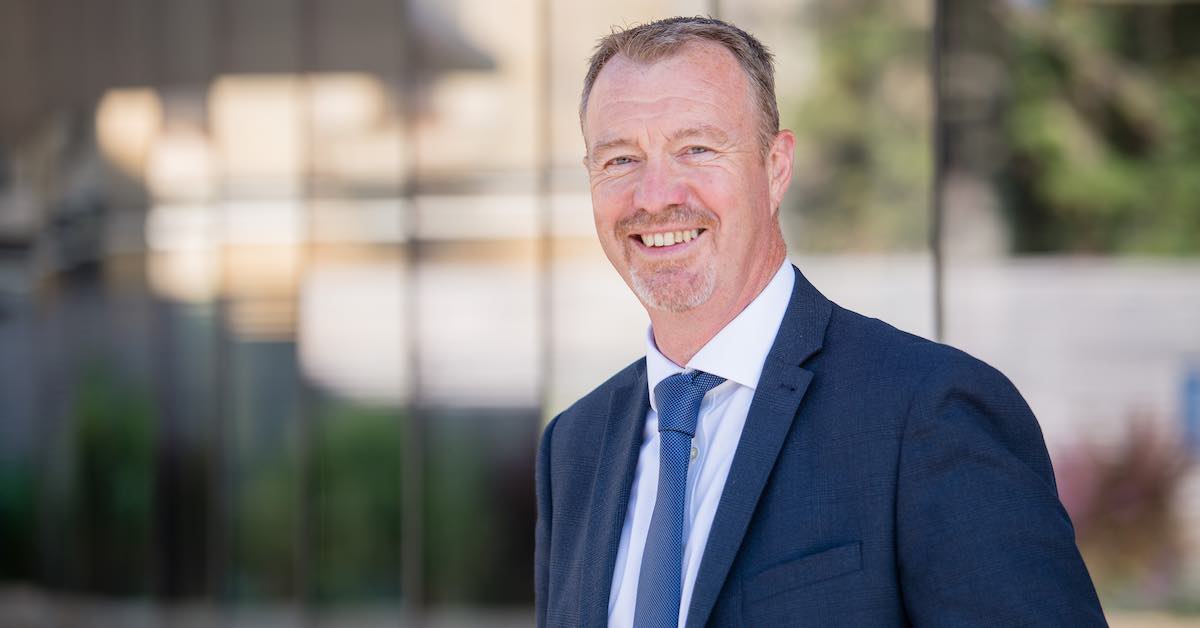
Chief executive of Enterprise Oxfordshire (the new trading name of OxLEP) Nigel Tipple is to leave the role.
Yorkshireman Nigel steps down after 12 years in the job and a 45-year working life, which started as a horticulture and forestry apprentice in Leeds and which finishes in a leading role in Oxfordshire, pairing the disadvantaged with opportunities, while at the same time, seeking to boost the county’s economy.
In his early career, his trade brought him to the role of contract manager for forestry and landscaping business Tillhill in the north west, a role which subsequently brought him into the world of the emerging development corporations and a new role as project manager for one in Leeds.
Among a raft of regeneration projects he oversaw was the city’s Royal Armouries, a venue later used for UKREiif and to which Nigel returned in recent years to represent Oxfordshire.
There followed leading roles in South Yorkshire, first at Grimethorpe Regeneration Executive, regenerating former mining communities, then at Objective One, working on large regeneration projects and finally at Renaissance South Yorkshire where his programmes involved the development of what became Robin Hood Airport Doncaster Sheffield.
Then at the opposite end of the country he ran CPR Regeneration, an urban regeneration company set up to redevelop Camborne, Pool and Redruth in Cornwall, dealing with hundreds of millions of pounds of public and private sector investment, before the role of chief executive of the new Oxfordshire Local Enterprise Partnership was offered in 2013.
Nigel said: “One thing that has been consistent in that meandering career path is that wherever I’ve worked, it’s always been with communities that had a genuine pride in the place they lived in but quite often had lost their way economically.”
“It was about us helping local communities, local businesses, local authorities and institutions, RDAs (regional development agencies) and others to do what they were good at.”
The aim, he said, was to improve the quality of life, opportunity and place as well as support business and boost skills.
He says while the move to Oxfordshire may have sounded like a different world, he witnessed similarities with the challenges he saw in both the north and the south west.
“Some of the communities in Oxfordshire are no different to some of those communities that I supported in Cornwall, in South Yorkshire, in Leeds or in Manchester; second and third generations not in employment and with low aspiration, living cheek-by-jowl with incredible wealth and incredible levels of opportunity.”
His experience, he said, illustrates the fact that the luck of an individual’s postcode could dictate their level of wealth, opportunity and life expectancy.
But he highlights two recent programmes at OxLEP which stand out as making a difference to disadvantaged communities, the Social Contract Programme, a scheme supporting people to find employment, education, or training and the Apprenticeship Levy, which has released funds for SMEs to employ more apprentices in sectors such as construction, healthcare and technology.
He says the success of both could easily be replicated in other areas.
“We’ve run an incredibly successful social contract programme which works with voluntary community associations, third sector associations – the likes of Sofea and Aspire – who worked with us to deliver programmes that support individuals within their own communities to have the confidence to be the best person they can be.
“And quite often, it’s relatively modest levels of financial input that have massive social economic impact for the individual and for the county.”
The Apprenticeship Levy programme has accelerated training and employment opportunities across Oxfordshire, securing more than £6 million in the last three years.
The county’s large employers pay the levy and, if they don’t fully utilise it, EO helps them release some of the funds to support SMEs, charities and social enterprises.
Nigel said: “That’s £6m that would have otherwise gone back to treasury, now being actively deployed from large levy paying companies to support our community and the wider economy.”
He has little doubt the work of Enterprise Oxfordshire, now a council-owned company, will continue to bring about success. The key, he says, is those around him.
“I’ve been fortunate to have a team of people who are passionate, who care and are committed. We’ve got an open culture, we’ve got people who will go the extra mile to get something done right.
“They don’t clockwatch, they don’t knock off at five o’clock because they’ve done their seven hours 25 minutes or whatever, they commit the time that’s needed and I am forever grateful for the kind of culture that we managed to develop’”
Following his nomadic career where he averaged three to five years in his many roles, north and south, Oxfordshire was by far his longest stint in any job. He says the county has a ‘stickiness’ about it and is one where success has a knock-on effect to the UK and its position globally.
Although a number of part-time/non-executive roles will occasionally bring him back to Oxfordshire, Nigel, who now lives in Cornwall, cannot hide his admiration for his team.
“I’m leaving behind an incredibly capable team of individuals, who have been the driving force behind everything that we’ve done. We certainly wouldn’t have delivered at the scale, at the pace or with the kind of trusted relationships that we got, had we not had such a dedicated team.
“So for me that that’s a legacy that we must not lose.”
© Thames Tap (powered by ukpropertyforums.com).
Sign up to receive our weekly free journal, The Forum here.