






The Government’s planning reforms have been described by an Oxfordshire council as a ‘deliberate attempt to undermine democratic oversights’.
Vale of White Horse District Council says a proposed two-tier decision-making system is a ‘needless and retrograde step’.
Under the plans, some planning applications (Tier A) would automatically be determined by officers, removing the right of councillors to consider them at committee.
They would also remove the right of councillors to call in certain applications to committee, such as housing developments of up to nine houses.
Councillors have called on ministers to urgently rethink the proposed automatic scheme of delegation. They argue it would strip councillors of their democratic accountability.
Cllr Bethia Thomas, leader of the council, said: “These proposed reforms are unnecessary and will not improve the decision-making process. Indeed, they will make the decision-making process less transparent and will undermine a vital principle of local democracy.
“I’d particularly like to express opposition to the removal of the right of councillors to call in an application to committee. It is a vital principle of democracy and transparency that applications can be called in by ward members in consultation with local stakeholders and with the agreement of elected members, the chair/vice-chair of planning committees.”
The council disputes the claim that calling in applications causes undue work pressures and a high number of inappropriate items coming before the committee.
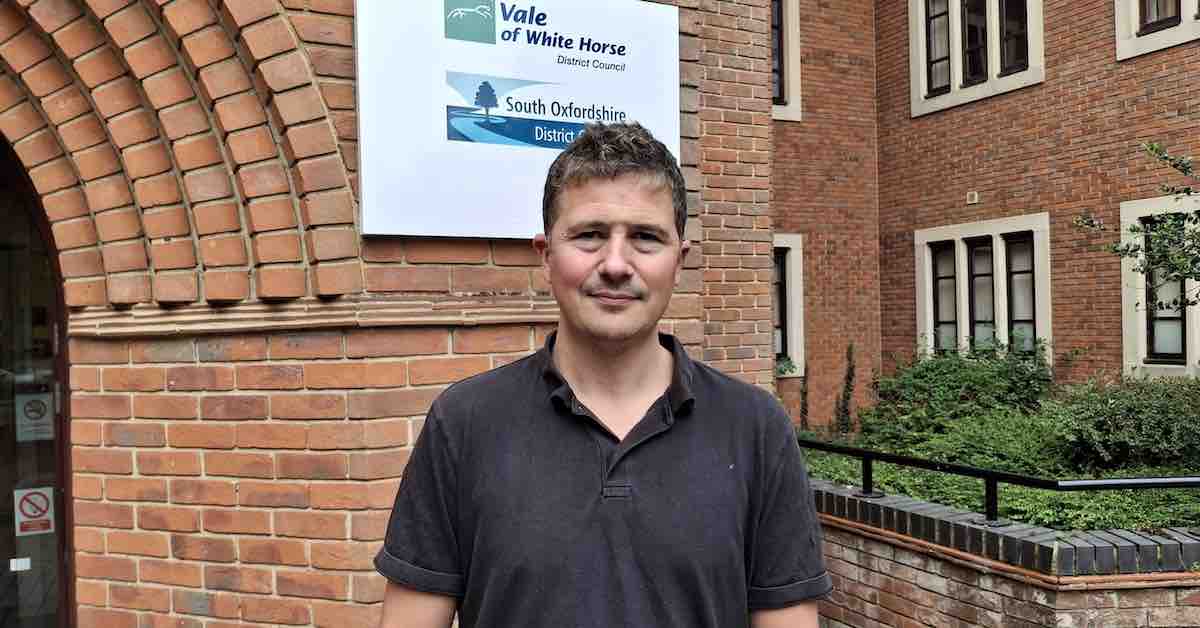
Cllr Max Thompson, chair of planning (pictured above), argued: “This proposal is at best a solution in search of a problem, and at worst a deliberate attempt to undermine democratic oversights and local faith in the planning process.
“Well over 95 per cent of planning applications are already determined by planning officers without coming before planning committee. Each year Vale’s planning committee determine around the 30 – 40 most complex and contentious applications in an open forum that allows opponents and supporters, including town and parish councillors, to be heard.
“If this scheme was in operation, around three quarters of applications that committee have heard in recent years would not have come to us.”
Cllr Emily Smith, cabinet member for planning development, said: “Our council’s constitution includes the ability for elected members to refer applications to the planning committee, and this process helps build positive working relationships between planning officers and councillors, which results in better planning decisions for their communities.
“The Vale’s planning is clearly working well with significantly more homes being given planning permission than the new Government targets require, so the proposal to reduce the input of local elected members seems like a needless and retrograde step.”
A motion expressing the council’s opposition was unanimously approved at the Vale’s full council meeting on July 16.
If the Government goes ahead with its proposals, the council is urging it to ensure councillors and the chief planner maintain call-in powers for the most controversial applications, along with borderline applications, so that all information available is considered in public.
© Thames Tap (powered by ukpropertyforums.com).
Sign up to receive our weekly free journal, The Forum here.



Due to local councils restricting the supply of new homes prices are to high. Government is seeking ways to solve this problem. If there is a conflict between national needs for economic growth, more homes and better infrastructure on the one hand, or local opposition to local land use change which take’s primacy? Devolution of Whitehall powers to local councils will raise the importance of this decision. One solution for councils whose residents do not want to carry their share of the burden might be to surcharge the local rates of these residents, and use the proceeds to subsidise the residents of host areas taking this overspill demand. It is a free market solution which places a price on the rationing of building land.