








Researchers at the University of Surrey say satellite data could play a central role in deciding where to build the data centres powering AI growth, by showing where renewable energy, water and land are available, and where drought and climate risks are highest.
In a comment for Nature Reviews Clean Technology, they argue that Earth observation should become a formal part of how governments, regulators and investors plan, operate and assess the clean energy transition.
The team says the need is urgent. In Britain, contracted demand in the electricity grid queue has surged as data centre projects expand, while globally electricity use from data centres is expected to rise sharply by 2030.
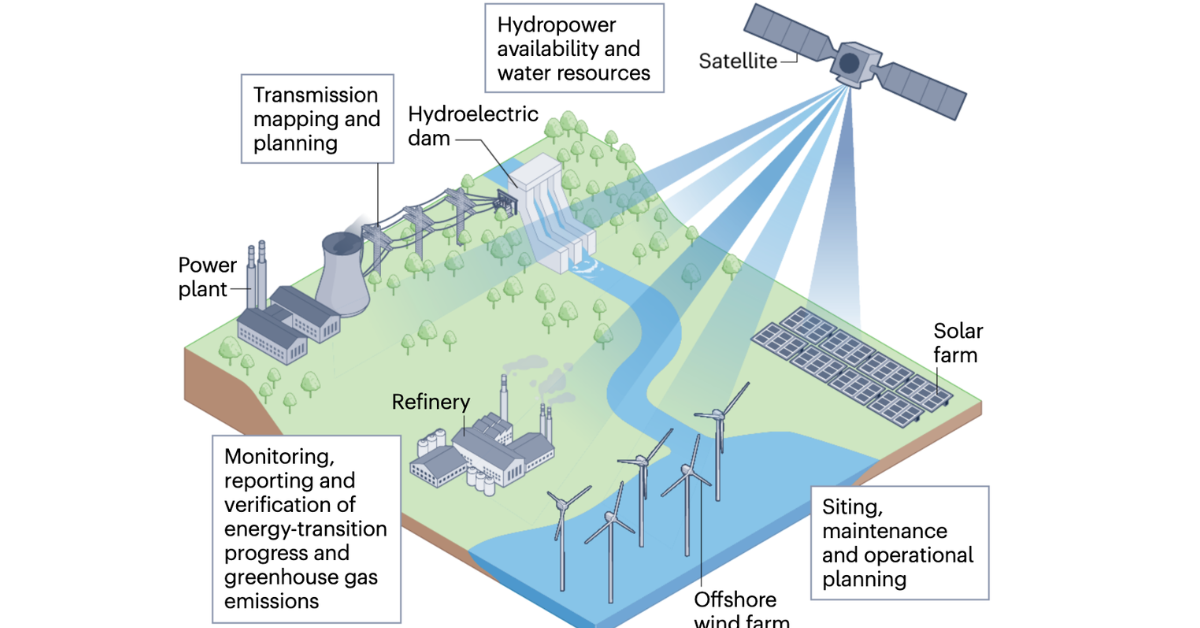
Surrey’s researchers believe geospatial and satellite evidence can help place new facilities more strategically by combining information on solar and wind potential, land-surface temperature, water availability, biodiversity, land constraints and climate-risk projections.
They also show how satellites can support the whole energy system. Tools such as the Global Solar Atlas and MapYourGrid already use satellite information to guide planning. Thermal imaging can detect faults in solar panels, radar can help track wind conditions around offshore farms, and satellite monitoring of rivers, reservoirs and drought can help forecast risks to hydropower and cooling water supplies. Methane-sensing satellites can also help regulators check emissions from oil and gas infrastructure.
The authors want satellite evidence required in renewable zoning, permitting, climate-risk screening and environmental assessments, with clear data standards and uncertainty reporting. They stress that satellite data should complement, not replace, ground surveys and local knowledge.
Their message is clear: better satellite evidence can make energy decisions more efficient, accountable, and resilient.

© 2026 UK Property Forums. All rights reserved.
This article and its contents are the intellectual property of UK Property Forums and may not be reproduced, distributed, or used in any form without prior written permission. The views expressed are those of the author(s) and do not constitute legal or professional advice.