











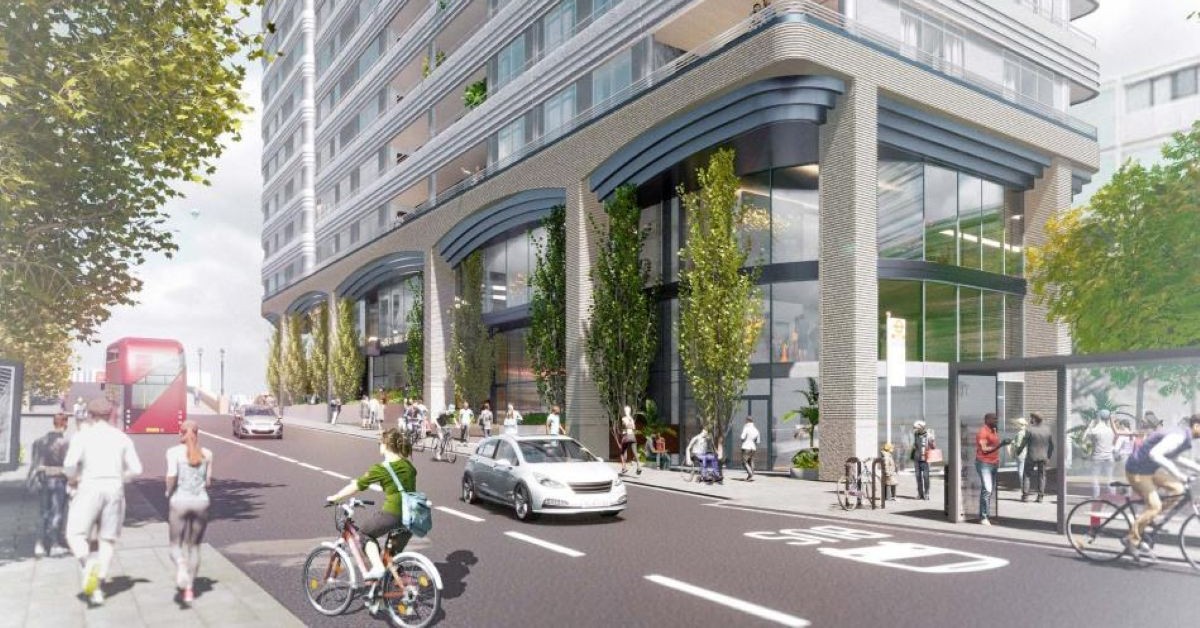
The Planning Inspectorate dismissed the appeal against the proposed Battersea Bridge skyscraper on 14 May 2026, upholding the earlier refusal by Wandsworth Council.
The scheme, originally a 34-storey tower and later reduced to 29 storeys, was found to be unacceptable because its scale, massing and location would cause serious harm to the area’s heritage character, townscape and views across the River Thames. The Inspector gave substantial weight to objections from local groups, statutory bodies, and thousands of residents, and agreed that the development would be an overbearing, visually intrusive addition to the riverside.
A central reason for dismissal was conflict with the recently adopted Wandsworth Local Plan, especially the Riverside Area Strategy and Policy LP4. The Inspector accepted that the application site was identified for mid-rise development, not a tall tower, and that allowing such a scheme would undermine the plan-led system and weaken height controls elsewhere in the borough. The report also noted that the proposal sat uncomfortably beside Albert Bridge, Battersea Bridge and nearby listed buildings, and would be highly visible from Chelsea’s conservation areas, where its impact would be especially damaging.
The Inspector was not persuaded that the claimed public benefits outweighed the harm. Concerns remained about traffic, constrained access, construction disruption, parking demand, and the adequacy of the fire strategy and housing design.
In short, the appeal was rejected because the tower was found to be too large for the site, inconsistent with local policy, and harmful to designated heritage assets and the wider riverside setting.

© 2026 UK Property Forums. All rights reserved.
This article and its contents are the intellectual property of UK Property Forums and may not be reproduced, distributed, or used in any form without prior written permission. The views expressed are those of the author(s) and do not constitute legal or professional advice.