










Both Richmond Council and Wandsworth Council are strongly dissatisfied with Hammersmith and Fulham Council’s latest approach to Hammersmith Bridge, because they believe it falls short of what local residents, businesses, and public services need.
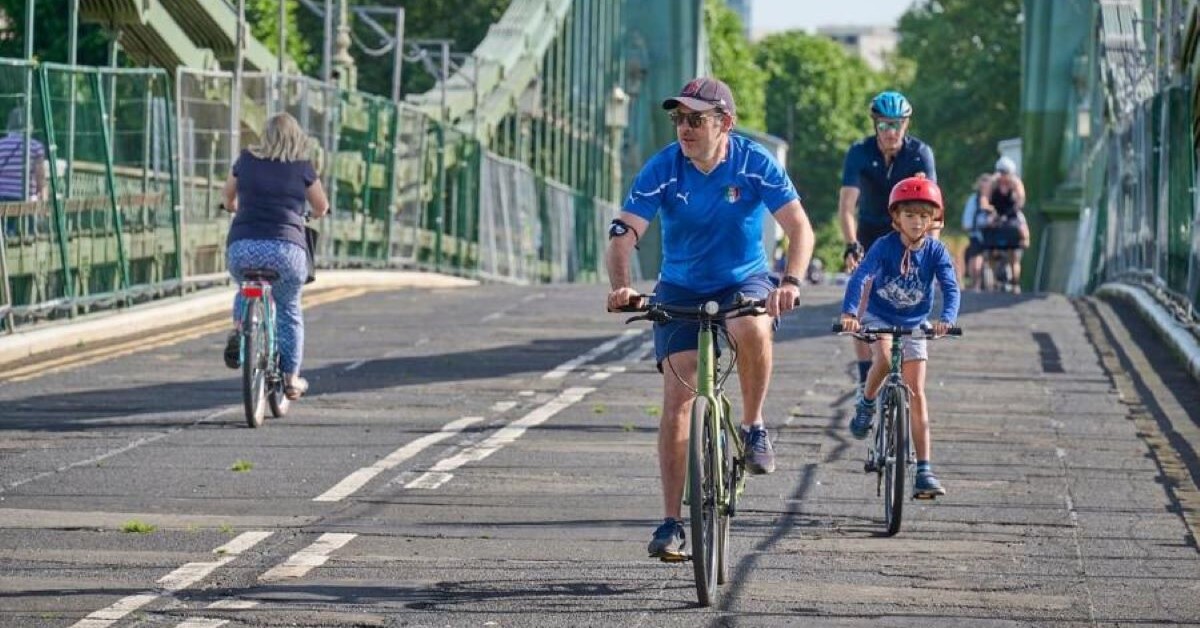
Their central concern is that the current proposal appears to settle for a limited reopening that would keep the bridge open only to pedestrians, cyclists, and river traffic, rather than restoring a full transport link that can once again carry buses and emergency vehicles.
Richmond Council, through deputy leader and Transport and Air Quality Committee Chair Councillor Alexander Ehmann, argues that the proposal shows “a poverty of ambition.” In Richmond’s view, after years of either complete or partial closure, the public deserves a more serious and more useful long-term solution than one that merely preserves the bridge in a reduced state. The council is particularly frustrated that the latest plan appears to retreat from fuller refurbishment, which Richmond says is necessary if the bridge is to regain its role as a genuine cross-river transport connection.
A major concern for Richmond is equity and accessibility. The council says the needs of residents who cannot walk or cycle across the bridge are being overlooked. For many people, including older residents, disabled residents, parents with children, commuters, and those who rely on buses, a pedestrian- and cycle-only bridge does not solve the underlying transport problem. Richmond also highlights that local people want to see buses and blue light services using the bridge again, suggesting that a more limited reopening would continue to exclude many of the communities most affected by the closure.
Richmond’s position is that simply maintaining the bridge for its present restricted uses is “not good enough.” The council believes this would leave a major gap in the local transport network and fail to deliver the connectivity that residents expect from such an important piece of infrastructure. Its broader message is that Hammersmith Bridge should be restored in a way that supports full public benefit, not merely a reduced or symbolic reopening. By saying it will continue to make the case for a “Better Bridge,” Richmond is signalling that it wants a long-term solution that restores the bridge’s value as a proper transport route, not just as a walking and cycling corridor.
Wandsworth Council shares a similar but slightly broader concern about the consequences of limiting the project’s ambition. Councillor Dan Hamilton, Wandsworth’s cabinet member for Transport, says the latest update is “deeply disappointing” because it appears to lock in years more of congestion across south-west London. From Wandsworth’s perspective, the bridge’s restricted status continues to displace traffic onto other routes, worsening pressure on nearby roads and creating wider network problems that affect many parts of the region.
Wandsworth is especially focused on the practical impacts of prolonged closure or partial reopening. The council argues that the current approach will continue to harm residents and businesses by increasing journey times, making travel less reliable, and placing additional strain on alternative transport corridors. In its view, the bridge should be restored as a functioning part of the road network, rather than left in a condition that fails to relieve congestion or support the efficient movement of people and goods.
Another key Wandsworth concern is the need for stronger cooperation between Hammersmith and Fulham Council and the central government. Wandsworth is urging Hammersmith and Fulham to work with the Government to get traffic moving across the bridge again. This suggests frustration not only with the limited scope of the current proposal, but also with the pace and direction of decision-making. Wandsworth believes the bridge’s reopening should be treated as a strategic transport issue requiring a coordinated solution, rather than a narrow local compromise.
In summary, Richmond and Wandsworth are united in rejecting a limited, pedestrian-focused future for Hammersmith Bridge. Richmond’s argument centres on ambition, fairness, and accessibility: it wants a bridge that serves residents who need buses, emergency access, and full connectivity. Wandsworth’s argument focuses on congestion, economic harm, and network disruption: it wants the bridge fully reopened to vehicles to relieve pressure across south-west London. Together, both councils are pressing for a more comprehensive refurbishment and a much bolder commitment to reopening the bridge as a genuine transport route.
They see the bridge not merely as a local crossing but as an essential piece of regional infrastructure. For both councils, a phased or restricted reopening may preserve access for some users, but it does not address the larger problem created by years of disruption. Their shared position is that the current proposal risks institutionalising a second-best solution, while residents continue to bear the costs of isolation, congestion, and reduced mobility. In that sense, both councils are demanding a restoration plan that matches the scale of the problem and the importance of the bridge to daily life in west and south-west London.

© 2026 UK Property Forums. All rights reserved.
This article and its contents are the intellectual property of UK Property Forums and may not be reproduced, distributed, or used in any form without prior written permission. The views expressed are those of the author(s) and do not constitute legal or professional advice.