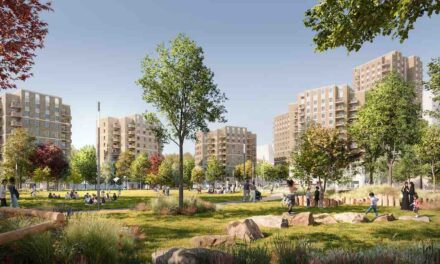












Maxwell Fahie and Fergus Wootton from Savills discuss how international best practice provides an opportunity to challenge established thinking and consider different approaches to development and infrastructure delivery:
Good residential development is about more than delivering new homes. With housebuilders increasingly focused on sustainable placemaking, low-carbon infrastructure and resilient masterplanning, it is about creating places that work for the people who live in them – both now and in the future.
During a two-day field trip, the development team at Savills Cambridge visited three leading regeneration projects in Sweden. The purpose was not only to see best-practice development first-hand, but to consider how the principles behind these projects could strengthen advice on strategic land, masterplanning and the delivery of sustainable communities in the UK.
While the Swedish development model differs from that of the UK, many of the challenges being addressed are familiar: How can development respond to a changing climate? What makes people feel connected to a place? And how can today’s buildings and infrastructure remain useful as our needs evolve?
Infrastructure as the foundation of place
Hammarby Sjöstad, a former industrial area in Stockholm, has been transformed into a residential neighbourhood built around water, public transport and green infrastructure – which was an integral part of the development’s vision.
Transport, public spaces and essential services were planned and delivered alongside the new homes, including a district heating and power network, and an innovative underground vacuum system that transports residents’ waste to central collection points.
This early investment provided the framework around which the new community could grow while supporting a more efficient and sustainable use of resources. For UK development, it reinforces the importance of considering utilities, movement and social infrastructure as part of the initial masterplan, rather than as later interventions.
Making landscape work harder
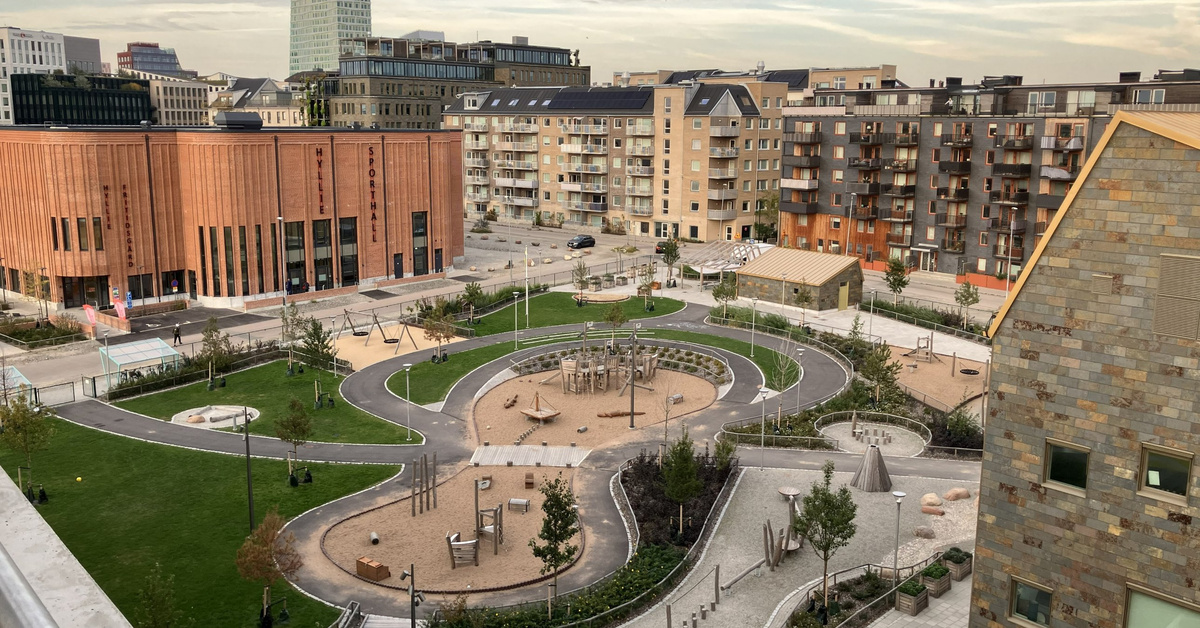
At Västra Hamnen in Malmö, the regeneration of former industrial land demonstrates how landscape can combine environmental functions with a strong sense of place. Water, vegetation and elements of the area’s industrial heritage have been incorporated into the development rather than treated as constraints.
This was evident at Hammarby Sjöstad, too, where green corridors and water management features perform practical environmental functions while contributing to an attractive setting. The buildings have also been carefully designed to preserve views and strengthen connections between streets, open spaces and the waterfront. The result is a landscape that is both attractive and purposeful. This integrated approach can better inform the earliest stages of site promotion and masterplanning, helping environmental requirements contribute positively to a scheme’s identity and overall quality.
Planning for an uncertain future
In Hyllie, Malmö, multi-purpose mobility hubs provide parking alongside leisure and community facilities, with their flexible design allowing the structures to be adapted to alternative uses if private car use declines in the future.
Designing buildings to accommodate different uses over time may reduce the need for demolition and redevelopment, while helping places respond to changing patterns of living, working and travel.
This future-proofing approach can also be seen in how Sweden addresses climate risk. At Hammarby Sjöstad, planting choices have been informed by anticipated future temperature increases, while water storage and drainage are integrated within the landscape.
These examples reinforce the importance of testing how development strategies can respond to long-term changes in climate, transport and occupier needs, and how building adaptability into a scheme from the beginning can support resilience while protecting its value and relevance over time.
Long-term leadership and collaboration
Much of what we saw in Sweden was supported by significant municipal land ownership and public sector investment, which has enabled a long-term approach to design, sustainability and infrastructure – with landowners retaining considerable influence over how development comes forward. This emphasises the importance of landowners in establishing a clear trajectory.
Close collaboration between the public and private sectors was another consistent feature of the projects, underlining how financial and non-financial objectives do not always need to compete. With a shared vision and the right delivery structure, design quality, environmental performance, inclusivity and commercial viability can reinforce one another.
While the UK planning and development context is unique, exposure to alternative delivery models and international best practice provides an opportunity to challenge established thinking and consider different approaches to development, infrastructure delivery and placemaking. As expectations around sustainability, resilience and quality continue to rise, the ability to draw on lessons from leading projects around the world will become increasingly important.
Cover image: Pictured (l-r) Maxwell Fahie, associate director at Savills Cambridge, Fergus Wooton, graduate surveyor at Savills Cambridge

© 2026 UK Property Forums. All rights reserved.
This article and its contents are the intellectual property of UK Property Forums and may not be reproduced, distributed, or used in any form without prior written permission. The views expressed are those of the author(s) and do not constitute legal or professional advice.